
Getting Your Tiny House Home: Width, Brakes and Delivery Explained
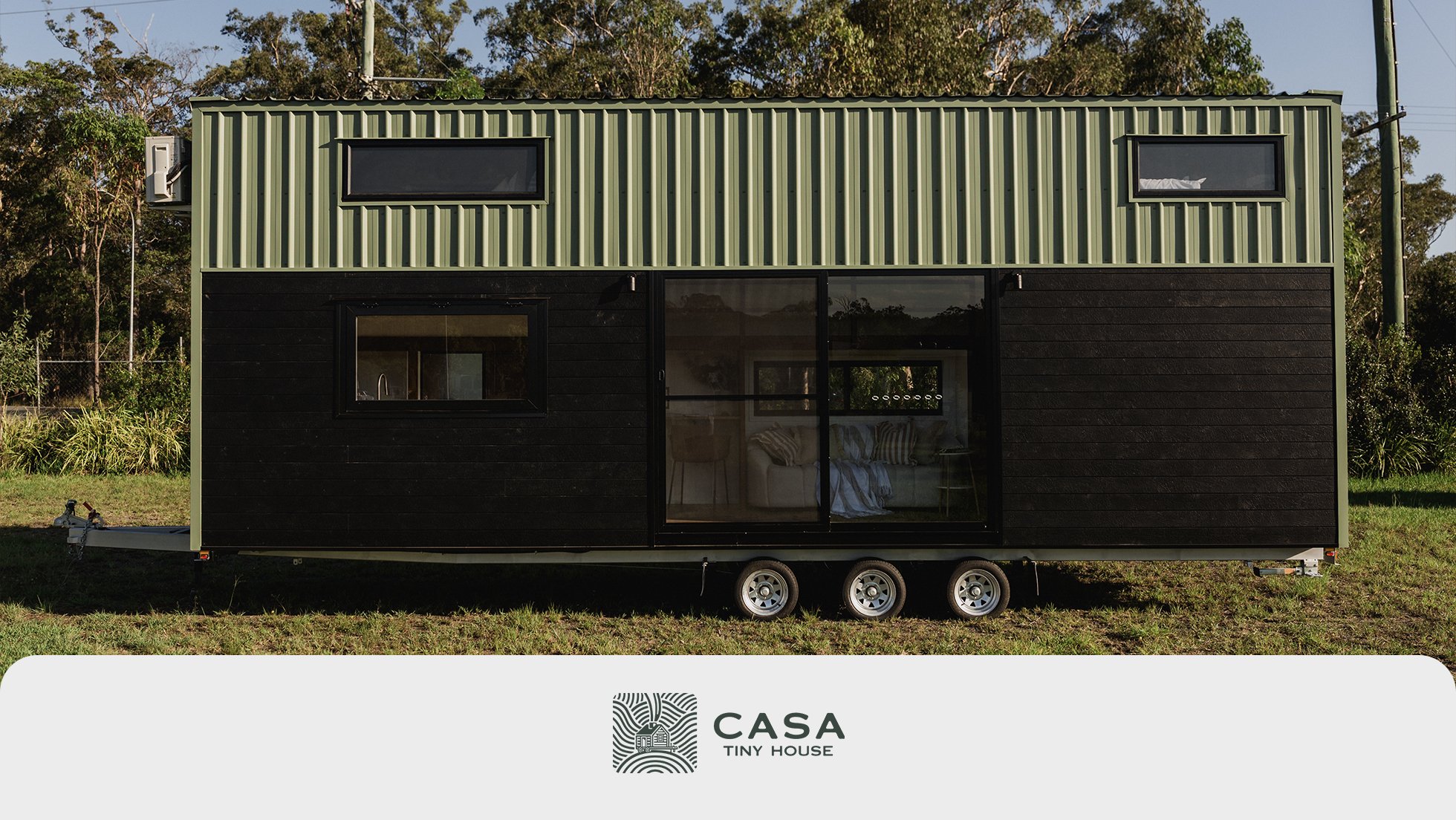
A tiny house only becomes a home once it's safely on your block. Between our workshop in Landsborough and your site sits the part most buyers never think to ask about: how the home actually gets there. It isn't the glamorous part of the process, but it's where a proper build quietly proves itself.
Let's clear one thing up first, because it's the myth we hear most. Every tiny house on wheels has brakes on its trailer. That's not the difference between a good build and a bad one. The real question is whether the whole setup underneath the home is engineered for what a finished tiny house actually weighs, and whether it's matched to how your home will travel to your block. Here's the honest, builder's version of how it works.
A finished tiny house is heavier than a caravan
A tiny house is a movable, fully-built structure: steel framing, cladding, insulation, a real kitchen, a bathroom, appliances and joinery. It's not a caravan, and it doesn't weigh like one. And no two homes weigh the same, a larger family layout with a full kitchen is a very different load to a compact single-level design.
That's exactly why the trailer, the axles and the braking underneath your home are engineered for what your finished home actually weighs, not chosen to hit a price. Get that engineering right and the home travels safely and lasts for decades. Get it wrong and no amount of nice joinery makes up for it.
Width decides how your home travels
2.5 metres is the standard legal towing width in Australia. A home built to 2.5m is classed like a caravan: road-legal, DA-exempt by design, and freely towable behind the right vehicle. This is why most of our homes are 2.5m wide.
3 metres is our wider design (our Ember and Meadow layouts, and custom builds). It gives you noticeably more living space and is still DA-exempt. It travels as an oversize load, which means oversize signage rather than a special permit, and it's classed as a registrable trailer rather than a caravan. We cover the space side of this in our guide to how wide a tiny house can be.
How we get your home to your block
This is the part we handle, and there's no one-size answer. Every home is different, and so is every site. The size and weight of your build, the access to your block and the distance from our workshop all shape how your home travels. Some homes are towed, others are carried in on a truck and set in place. We work out the right method case by case, and you're never left sorting out the logistics on your own.
Our wider 3m homes show why. A 3m home is moved by truck as a planned oversize delivery, and where the build calls for it, we fit a heavy-duty air-brake system, the same strong, stable braking used on large road transport. It's a more substantial (and more expensive) setup, engineered for a home of that size.
We build the home, engineer it for how it needs to travel, and get it onto your block finished.
What to ask any tiny house builder
If you're comparing builders, the towing and delivery conversation tells you a lot. A builder who's proud of their engineering will answer these without hesitating:
Is the trailer, the axles and the braking engineered for a fully-finished home, not a caravan?
What braking system is fitted, and does it match how my home will be delivered or towed?
If I want a 3m home, how do you get it to my block, and is it still DA-exempt?
At Casa Tiny House, the answer to that last one is yes: our 3m homes are still built as DA-exempt tiny houses on wheels. You get the extra space without stepping into a council development application.
The bottom line
Towing and delivery aren't the exciting part of buying a tiny house, but they're where the quality of the whole build shows. A home engineered for its real weight, on a trailer rated for the job, with braking matched to how it travels, is a home that gets to your block safely and stays with you for the long run.
Want to know exactly how your home would be built, towed and delivered? Book a free consultation, or visit the workshop and see it for yourself.
FAQ
How wide can a tiny house be to tow legally in Australia?
Up to 2.5 metres wide without a special permit. A home built to 2.5m is classed like a caravan and can be towed freely. A wider home, such as a 3m build, travels as an oversize load with oversize signage and is moved by truck as a planned delivery.
How heavy is a tiny house on wheels?
A tiny house is a movable, fully-built structure and much heavier than a caravan of the same length. The exact weight depends on the size, layout and finishes of your specific home, which is why the trailer, axles and brakes are engineered around the finished weight of each build rather than a one-size figure.
Do tiny houses need brakes?
Yes, and every tiny house on wheels has a braking system. What matters is that the braking is engineered for the real weight of a finished home and matched to how it travels. For some wider 3m builds, that means a heavy-duty air-brake system.
Can I tow a Casa Tiny home myself?
We handle delivery and setup to your block. Every home and every site is different, so we plan the safest way to get yours there case by case, whether it's towed or carried in on a truck, rather than leaving you to arrange it alone.